
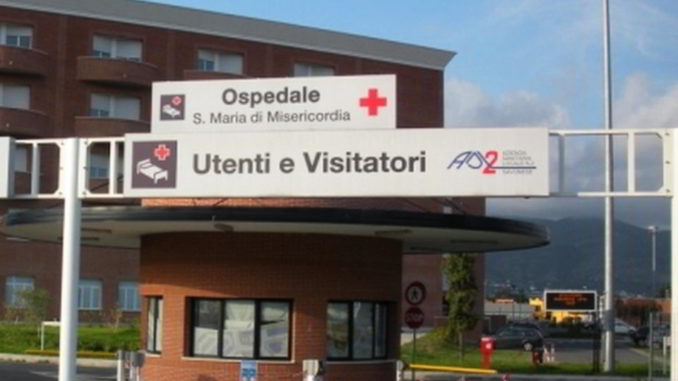
From September 9, the First Aid Point (PPI) at Albenga hospital restored the 24-hour service, ending the nighttime limitation introduced at the beginning of the month. The decision, announced by the Liguria Region, is part of a broader project to strengthen local healthcare facilities, aimed at ensuring timely and effective nearby assistance, especially for low-complexity emergencies.
The reactivation of the 24-hour PPI was achieved through an agreement between the Region and the local healthcare system (Asl2), which recognized the importance of maintaining an operational facility even during nighttime hours in a strategic area like the Ingauna. The President of the Region, Marco Bucci, emphasized the value of this service, not only as an administrative achievement but as a concrete response to the needs of citizens, avoiding risks associated with the absence of a healthcare reference point during the night. Bucci also highlighted a decision aimed at strengthening local presence, at a time when there is a prevailing trend towards the centralization of services.
The Health Councillor (assessore), Massimo Nicolò, attributed the reopening to continuous dialogue between local authorities, healthcare providers, and the community, highlighting how the ongoing availability of the PPI will help relieve pressure on the emergency rooms of larger hospitals, improving the speed and effectiveness of interventions. This initiative is part of a broader plan to enhance existing facilities and optimize healthcare response in the area.
The limitation of the service to 12 hours, decided by ASL2 at the beginning of September, had sparked critical reactions from local administrations and the community, with calls for a reconsideration of the decision. Among the opponents was the mayor of Albenga, Riccardo Tomatis, who convened an assembly of the mayors of the district to discuss a unified position on the matter, describing the 24-hour service as “essential” to protect the right to health. The meeting, scheduled for September 11 and open to the public, was to include experts and representatives of volunteer associations engaged in emergencies, highlighting the importance attributed to the facility.
Despite the restoration of the service, political concerns remain. Roberto Arboscello, regional councilor of the Democratic Party, expressed doubts about the future operational management, requesting clarifications on the staff employed and the effects on the organization of the emergency rooms in Pietra Ligure. Arboscello highlighted the need to ensure that the reopening does not lead to overloads or disruptions for other healthcare facilities, emphasizing the importance of planning that avoids double shifts and organizational difficulties.
Among the essential functions of the PPI is to provide immediate assistance for less severe clinical conditions, acting as the first filter before any transfers to higher-level hospital facilities. The reopening of the night service is therefore a significant element to ensure adequate care in an area characterized by diverse demand and complex geographical distribution.
The debate on the management of the Albenga PPI highlighted some uncertainty in regional and corporate planning, at a time when the Ligurian healthcare system faces complex challenges related to resource management and the quality of care services. Mayor Tomatis reiterated the importance of maintaining strong focus on the strategic role of the Santa Maria di Misericordia hospital, emphasizing how the assembly of mayors represents a crucial moment to discuss the full enhancement of the facility and the integrated organization of services, including ambulance management.
During the meeting, there will be an analysis of how to direct ambulances to the Albenga PPI in less severe cases, in order to optimize the use of local resources and relieve the emergency room at Santa Corona. The early closure of the PPI had caused problems, with patients redirected to Pietra Ligure and ambulances stuck waiting for extended periods, reducing available resources in the area.
The mayor also highlighted how the 24-hour service represents a necessary but not exhaustive step, hoping for a shared commitment between institutions and citizens to strengthen the presence and ensure a healthcare system that meets the needs of an evolving area. With the continuous reopening of the PPI, the Albenga hospital aims to regain the trust of the population and play a more significant role in the regional healthcare network, integrating with the reference structures to provide more efficient and timely coverage.