
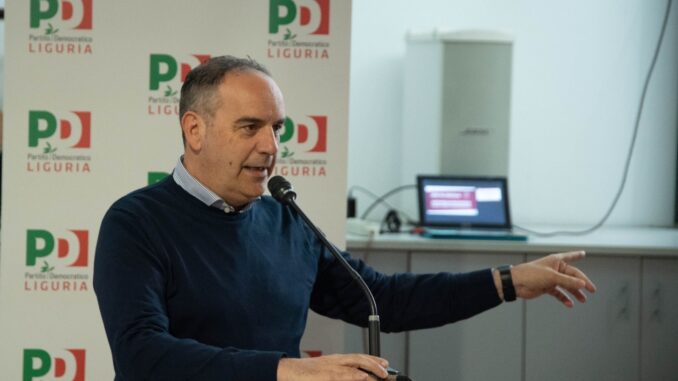
Davide Natale and Deborah Bellotti, respectively the secretary and the environmental manager of the PD Liguria, voice their concerns about territorial management in Liguria. The Bucci administration, continuing the trend of previous Toti governments, remains optimistic about the region’s land consumption, drawing on data from ISPRA. According to the latest report, Liguria is the only region in Italy to keep growth under 50 hectares, with a gross land consumption rate of 0.07% between 2022 and 2023, the lowest in the country. However, behind these promising statistics lies a complex reality. The calculation of land consumption is based on a total area of 542 thousand hectares, of which over 71% is forested. Excluding forests, mountains, beaches, and rivers, the truly available land is quite limited. The nearly 40 thousand hectares already consumed represent a significant portion of the available terrain, and despite the slower trend compared to the Italian average, no “change of pace” is evident, contrary to President Bucci’s claims.
Another cause for concern is the rise in impermeability. With 23.2% of urban areas in high hydraulic hazard zones and 29.1% in medium hazard zones, Liguria ranks among the most vulnerable regions. Furthermore, it holds a negative record for land consumption in protected areas (4.2%) and a worrying statistic for the coastal strip: over 45% of the land within 300 meters of the sea is consumed. The regional administration attributes these outcomes to urban regeneration policies, but as Natale and Bellotti point out, “urban regeneration does not mean property speculation”: it should instead involve the intelligent use of existing resources to enhance environmental and social conditions.
Policies like the Housing Plan promote deregulation, worsening the issue, while a strategy for rewilding is absent. Despite government funds allocated in 2022 for environmental restoration, Liguria has yet to reclaim any degraded land. The “EU Strategy for Healthy Soils 2030” calls for urgent measures to restore land permeability, and the national funds promised for 2023 and 2024 could be a crucial asset, provided they are paired with immediate projects and a strategic vision. It is vital for the region to focus on hydraulic safety and environmental quality, supported by a national soil consumption law setting clear and binding limits. This long-awaited law is crucial to prevent discretionary interpretations.
Andrea Orlando highlighted the approval of a zero soil consumption law as a priority during the electoral campaign. This challenge is also backed by the Ligurian PD, in collaboration with other forces of the centre-left and progressive coalition. “It’s time to change course and present a real picture of the situation,” conclude Natale and Bellotti.